

No. 24 Summer Special 2026
 Hello, summer!
Who would have thought ITV’s Coronation Street would feature in our newsletter? Read on for more.
This short special edition announces the launch of two new sets of evidence-based educational materials by The Reward Foundation. As always we make them available for free to ensure access for everyone.
Mary Sharpe, CEO
New legislation around sexting, ‘choking’ etc.
There has been a dramatic rise in harmful sexual behaviour among young people year-on-year. for the past five years. Research shows that porn use is a key driver of this aggressive behaviour.
The UK’s Online Safety Act 2023 has helped reduce children’s easy access to porn on websites sites and social media but not completely. A 2025 report by the Institute for Addressing Sexual Strangulation found that 43% of sexually active 16–17-year-olds had experienced sexual strangulation.
The Crime and Policing Act 2026 introduces new legislation around strangulation and nudification apps that parents, teachers and children need to be aware of. Education is still necessary, as legislation will not be enough. Understanding the reason for these developments may help children and young people under 16 be less annoyed about the proposed ban on social media next year.
New Lessons
The Reward Foundation has developed four new lesson plans with additional Research Notes to help teachers feel more confident in discussing these challenging issues with pupils. They replace the seven lessons we published before. There is no explicit content used and they have diversity elements where appropriate. They are also available on the tes.com website.
Although any lesson can be used alone, we recommend you start with the lesson on the “Best TEDx talk about Porn and the Brain”. That will set the context for understanding the impact of porn on the brain, escalation in the type of porn used (more violent material) and in the amount of time using it (neglecting schoolwork and other activities). It also highlights the good news that a user can overcome problematic use to get their life back. This lesson leads to the next ones about choking and to sexting with the legal implications of engaging in either.
The Best TEDx talk about Porn and the Brain for ages 14-18
This teaches about the brain’s reward /motivation system in a very accessible way. It explains how porn use can become addictive for some. It highlights the mental and physical effects of overuse, including sexual dysfunction. T shows what quitting can do to improve attainment and wellbeing with resources to help users quit. The lesson has updated statistics to reflect latest developments.
Choking, the Law and You for ages 14-18
Porn today is training young minds to want and need extreme sexual practices like sexual strangulation. It’s also called “air play”/ “breath play” in porn speak, or “choking” more colloquially among young people. Social media and related porn sites do not explain ‘consent’ in the medical or legal sense and can lead young people dangerously astray on the impact of these highly risky but common practices. Strangulation is the second biggest cause of stroke in women under 42. In the lesson you’ll see excerpts from an interview with the clinician, Dr Helen Bichard, who found this. Her team’s work is responsible for both the new legislation around strangulation and the storyline in Coronation Street.
Sexting, Nudies, the Law and You for ages 11-14
Sexting is not a legal term, but has very real legal consequences. It’s often called “nudies” and “dick pics” by pupils. In part due to social media influencers like Andrew Tate, some pupils become very coercive in their demand for them. If incidences are reported to the police, it can cause problems, especially for future their job choices, even for voluntary work. The lesson is based on the laws of England and Wales, and of Scotland. It is for guidance only and doesn’t constitute legal advice. This lesson updates our previous lessons on sexting. It is an easier to use format and takes into account the new legislation around online safety for pupils including nudification apps, AI deepfakes and images of sexual strangulation and suffocation. The case studies are suitable for the age group 11-14. It has diversity elements and there is no explicit content. There is also information about how to have nude images removed through the Report Remove programme. You can explore some of the key legal issues around sexting. It is for guidance only and does not constitute legal advice. This fully resourced lesson has been developed by lawyers in consultation with teachers, healthcare professionals and parents.
Sexting, Nudies, the Law and You for ages 14-18
The same as above but with case studies suitable for older pupils. For more details on porn’s impact on the adolescent brain see best-selling book “Your Brain on Porn- Internet Pornography and the Emerging Science of Addiction” 2nd edition by our late colleague Gary Wilson who made the TEDx talk mentioned above. It’s available in various formats and in 18 languages so far.
Additional professional training materials
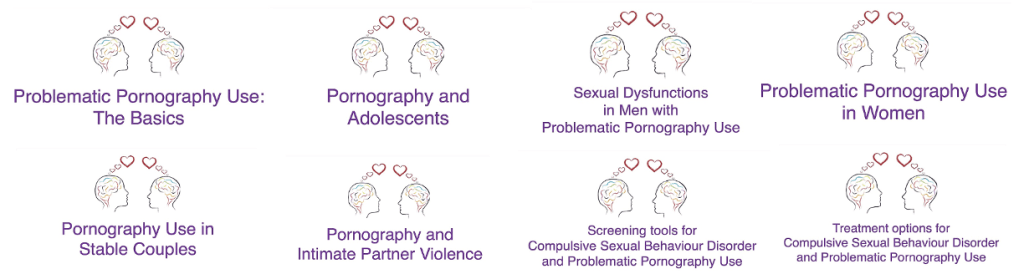
If you are an education professional, consider doing our free online course, Problematic Pornography Use, previously accredited by the Royal College of General Practitioners, if you wish to find out more about porn’s impacts. There are modules on the basics, about adolescents, intimate partner violence etc. with practical suggestions for those seeking to quit. We have now made the eight modules of the whole available as individual pieces if you don’t want to download the whole course. It contains a section on safeguarding for schools.
Enjoy a good rest this summer.
Best wishes,
Team TRF.