

Journalists have discovered The Reward Foundation. They are spreading the word about our work including: our lessons about risks from long term bingeing on porn; the call for effective, brain-focused sex education in all schools; need for training of NHS healthcare providers on pornography addiction and our contribution to research on porn-induced sexual dysfunctions and compulsive sexual behaviour disorder. This page documents our appearance in newspapers and online.
If you see a story featuring TRF we have not put up, please send us a note about it. You can use the contact form at the bottom of this page.
Latest Stories

Shocking new figures reveal record numbers of Scottish children committing sex attack
By Mark Howarth
January 11, 2026, 2:32 pm
Record numbers of Scottish children are committing sex attacks, shocking new figures reveal.
Scores of under-16s are being reported to the Procurator Fiscal for crimes including rape and sexual assault.
Almost 200 have faced either court or the Children’s Reporter for offences involving actual physical contact between the offender and victim in the last two years.
Such disturbing incidents have been on the rise since the pandemic, with experts fearing that lockdown left many youngsters in thrall to violent online pornography.
Last night, campaigners called on schools to do more to tackle the root causes of violence against women and girls.
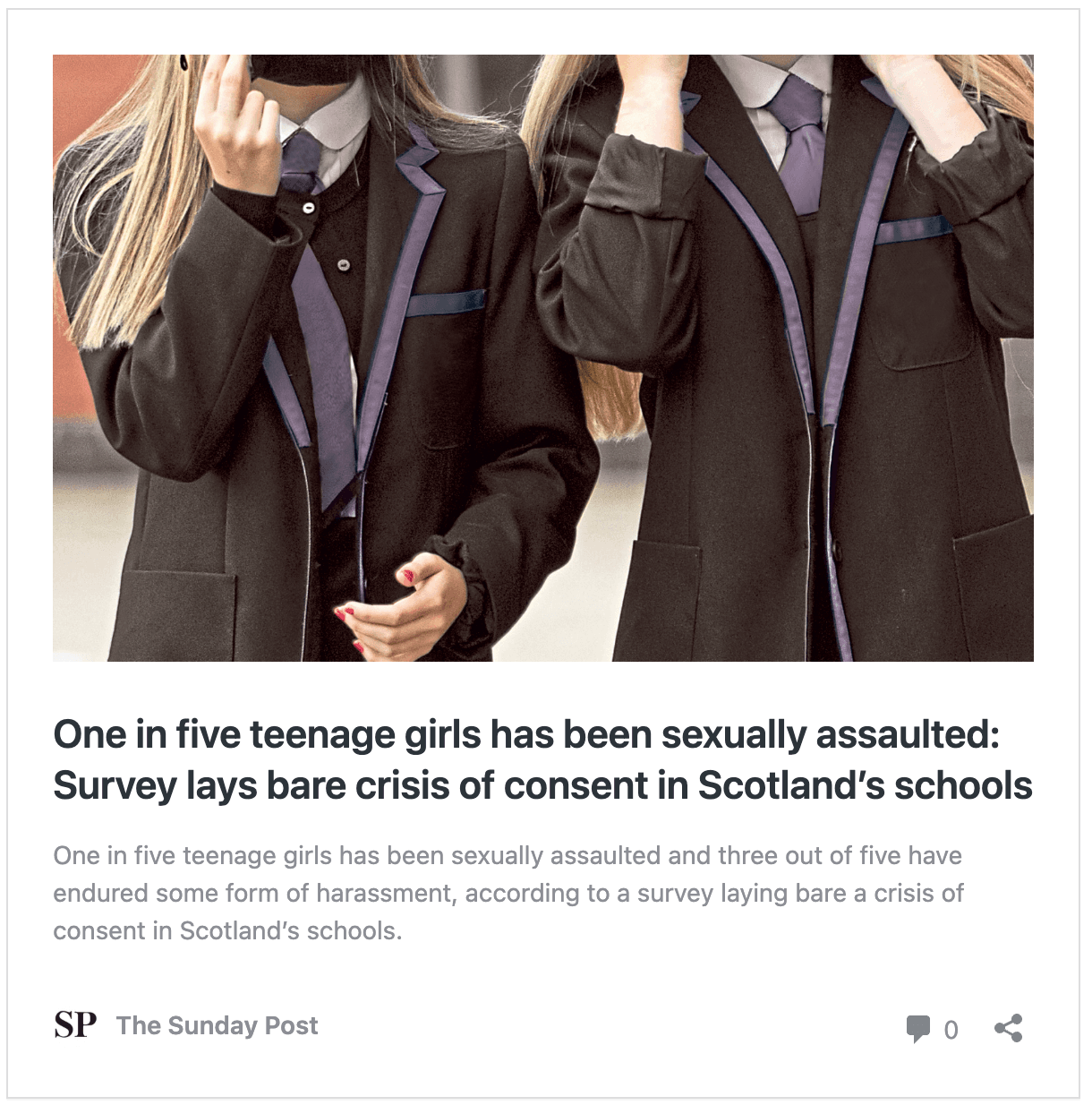
Four years ago The Sunday Post revealed how one in five teenage girls has been sexually assaulted.
Our Respect campaign called for classroom initiatives to help teens understand healthy relationships – along with tighter restrictions on the explicit internet material that’s blamed for warping children’s attitudes to sex.
But while UK ministers last month unveiled a new strategy to spot and address misogyny among youngsters at schools, the £20 million scheme will only run in England and Wales.
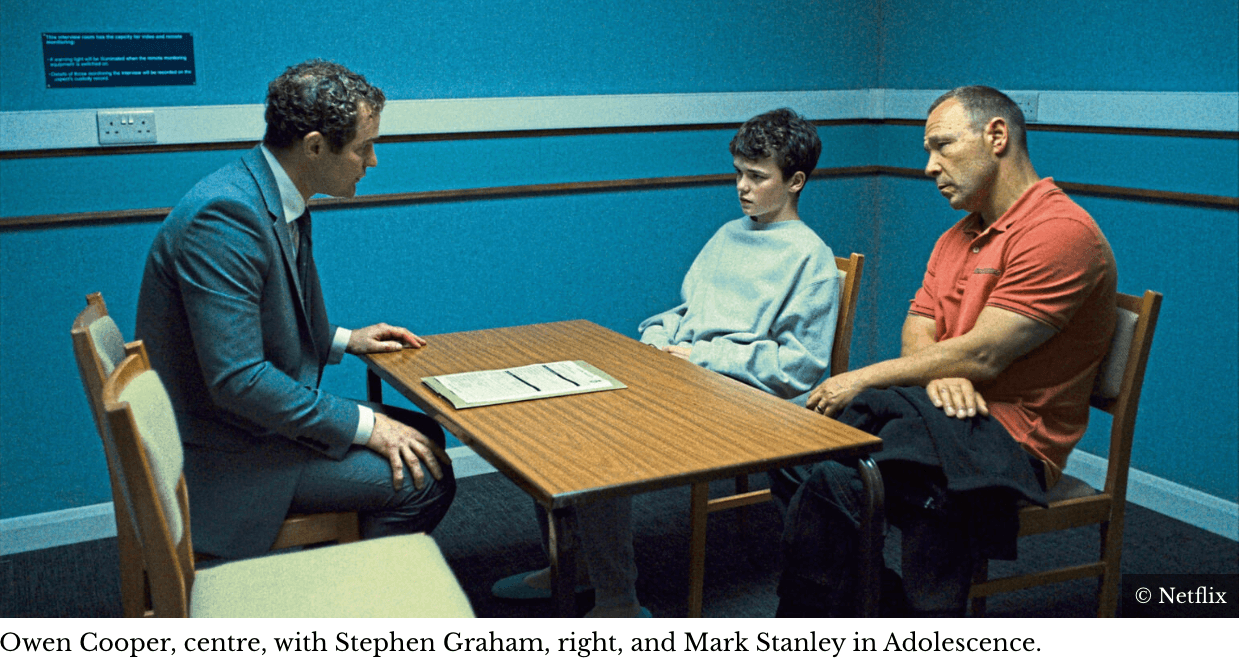
The spotlight fell on the problem last year in the wake of the Netflix series Adolescence, in which a 13-year-old boy is accused of killing a female classmate after watching online influencers.
Mary Sharpe, of the Reward Foundation charity, which researches the effect of online porn on young brains, said: “It is beyond argument that children have been ‘sexually radicalised’ and that is why we are seeing such a rise in figures for rape, sexual assault.
“And we also shouldn’t forget the online child sexual abuse involving young people taking, making or sharing indecent images.
“We need a Scottish version of the anti-misogyny strategy for schools, but it must be in parallel with an education programme to help young people understand the risks of porn use and to help them quit.
“The series Adolescence only used the word ‘pornography’ once in four programmes. We found out that the screenwriters didn’t know that porn could rewire the delicate adolescent brain, so they focused on social media influencers like Andrew Tate as the root cause instead.
“Online porn is highly stimulating content that changes the malleable adolescent brain at the deepest level so that it ‘needs’ and craves more shocking content.
“That’s why teaching pupils about consent scarcely works when teenagers are being groomed on a daily basis by porn. One school lesson will not cut through.”
The latest figures have been released by the Crown Office and Procurator Fiscal Service (COPFS) under Freedom of Information laws. They show that in 2023/24 – the most recent year for which there are complete figures available – an unprecedented 122 people aged under 16 were reported for contact crimes.
Among them were 38 cases of rape or attempted rape, eight of which were deemed so serious they were dealt with in an adult court.
There were also 84 children reported for sexual assault.
So far, casework for 2024/25 has brought forward a further 76 cases of contact crimes, but that figure is expected to rise as more decisions are taken.
The possible effect of lockdown can be seen in comparisons of data from before and after the pandemic.
In the three years after the arrival of Covid-19, there were 355 cases – up 43% on the 248 in the three years before the virus hit.
Since the pandemic, COPFS has also dealt with a further 213 more minor sex offences committed by under-16s, including possession of indecent photographs of children, disclosing intimate images and causing to view sexual activity.
Last year, a teenager was jailed for five years for the rape of a 13-year-old girl and the sexual assault of another, aged 12, in Dundee – in crimes a judge branded “wicked”. The boy – who was only 15 at the time of the offences – attacked his victims in woods in 2023. He will be on the sex offenders register for life.
Since last July, online porn providers have had to operate age verification checks in the UK to stop children gaining access.
While the new laws have reduced the number of youngsters viewing explicit material, research published this week found that almost half of adult users are now turning to unregulated sites. The Lucy Faithfull Foundation – a charity dedicated to preventing child abuse – warned these destinations may contain even more extreme content.
Our Respect campaign was launched off the back of a survey in which one in five teenage girls told how they had been the victim of sexual assault and 60% had endured harassment.
Meanwhile, almost 70% of those interviewed did not believe the scale of the crisis is understood.
Last year, the NASUWT union found 37% of female teachers in Scotland are facing verbal abuse several times a week, compared to only 18% of male colleagues.
Five years on from Sunday Post campaign, experts warn that Scotland still needs to do more
 Our campaign from 2021.
The Sunday Post’s Respect campaign called for effective classroom strategies to help teens understand healthy relationships – along with tighter restrictions on online porn.
But has enough changed in the five years since?
Equally Safe At School (ESAS) is an initiative developed by Rape Crisis Scotland (RCS) and Glasgow University.
It helps reshape the attitudes of teachers and pupils to make the reporting and prevention of sexual harassment part of a school’s culture.
RCS claims that while more lessons are being provided to address porn, violence and harassment, the scale of the problem continues to expand.
Chief executive Sandy Brindley said: “Scotland must do more to stop rape before it happens. We have seen an increasing number of young women and girls reporting sexual harassment and even sexual assault at school.
“We hear about teenage boys quoting dangerous figures like Andrew Tate.
“A recent study found that nearly half of sexually active young people in the UK have either been strangled or strangled someone during sex – that is horrifying.
“Prevention work in Scotland is desperately under-resourced, yet it is the first and often only line of defence in stopping this behaviour in its tracks. Giving young people the tools and education they need to identify, challenge, and report misogynistic and sexually violent behaviour is the best hope we have of curbing this disturbing rise in violence.”
Scottish Liberal Democrat MSP Beatrice Wishart, deputy convener of the Scottish Parliament’s Cross-party Group on Men’s Violence Against Women and Children, said: “These latest figures are very alarming.
“They point to a more insidious, systemic problem that we should be doing everything possible to stamp out.
“Attempts to tackle misogyny and violence against women and girls are falling short. While strategies like ESAS are well-intentioned, too little has been done to implement them in classrooms and wider school settings.
“Schools should have a curriculum that properly educates every pupil about relationships, sex and consent.”